








Cybercrime across Africa is evolving into a highly organized, AI-enabled ecosystem, with ransomware, business email compromise (BEC), online scams, data breaches, and digital sextortion driving unprecedented financial and societal damage. AI is accelerating phishing, deepfakes, identity fraud, and cybercrime-as-a-service, while weak legislation, limited cyber capabilities, and fragmented cross-border cooperation continue to benefit criminals. Financial services, […]
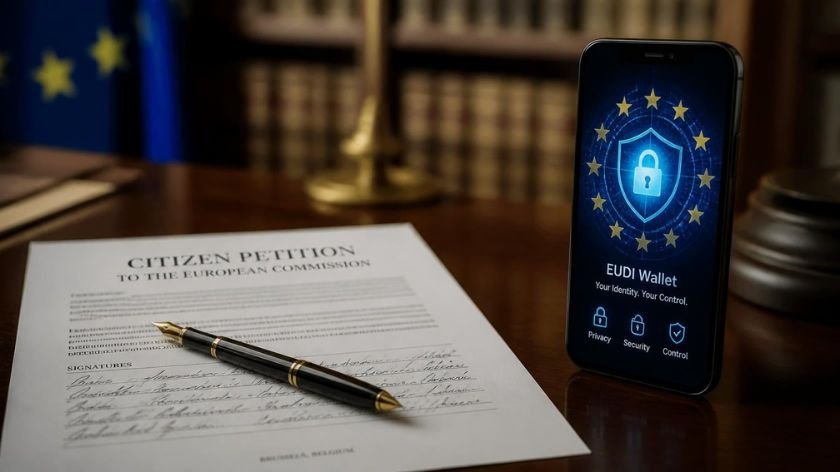
A new European Citizens’ Initiative opposes mandatory digital identities and age verification, advocating for voluntary, privacy-friendly, and decentralized solutions. The organizers aim to prevent citizens from becoming dependent on digital wallets managed by the government or Big Tech. To compel the European Commission to issue an official response, at least 1 million verified signatures must […]

Biometric verification has become a standard component of digital services, with organisations such as Google and Meta offering login via selfie or video verification. At the same time, rapid AI developments and increasingly realistic deepfakes are making the imitation of faces, voices, and videos significantly easier. The next generation of digital identity is therefore no […]

With Implementing Regulation (EU) 2026/1731, the European Commission has further elaborated the technical specifications for the European Digital Identity Wallet (EUDI Wallet). This shifts the focus from vision to the actual implementation of eIDAS 2.0. The wallet is merely the visible component of a much broader European trust infrastructure. This infrastructure relies on Qualified Trust […]

Google now allows users to log in via a selfie video, with the company storing this biometric data centrally. With each new login attempt, a live video is compared against the original stored on Google’s servers. While Google claims that the videos are stored encrypted and that movement prompts protect against deepfakes, this development raises […]
The European Commission’s DG CONNECT disclosed nine documents in response to an access-to-documents request, but all were already publicly available resources. No Data Protection Impact Assessment (DPIA), internal privacy-by-design documentation, threat models, or controller-role assessments were released. DG CONNECT stated it does not hold a DPIA, arguing that responsibility lies with the future publisher of […]

The UK’s communications regulator, Ofcom, is demanding stronger age verification measures from social media platforms ahead of a proposed social media age ban. The regulator has launched an investigation into TikTok, questioning whether its current age assurance methods effectively protect minors. Ofcom is also investigating dozens of adult websites and working with Google and Bing […]

The European digital ID wallet is intended to increase digital autonomy, but according to Waag Futurelab, the proposed architecture risks reinforcing dependence on platforms such as Apple and Google. Through the use of technologies like the Google Play Integrity API and Apple’s Managed Device Attestation, alternative operating systems and app stores could be excluded. Waag […]

The European Business Wallet (EBW) will become the digital identity for companies, allowing them to securely share data and digital attestations with governments and other organisations. The wallet builds on the European Digital Identity Wallet (EUDI Wallet) but is specifically intended for legal entities and enterprises. With the EBW, companies can handle administrative processes, reporting, […]

The Baltic states are taking a major step towards fully digital identification: users of the KYC platform iDenfy can now verify themselves via Mobile-ID (mID) without uploading a passport or identity card. In Estonia and Lithuania, Mobile-ID now holds the same legal status as physical identity documents, making digital onboarding fully legally valid. The solution […]