




How do we still prove that someone truly is who they claim to be?
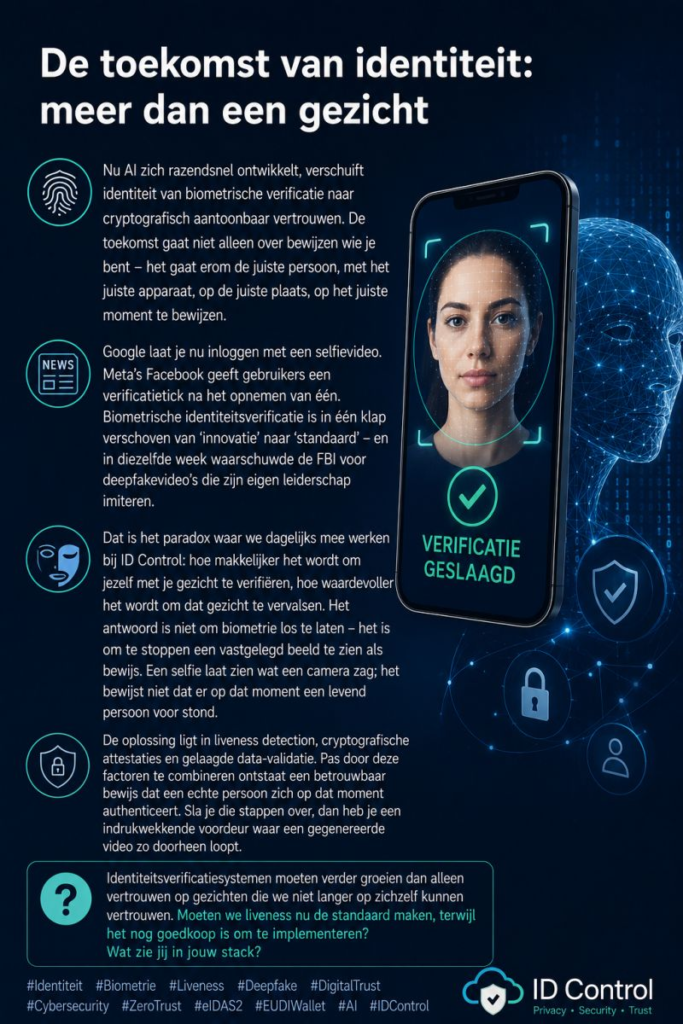
Biometric verification has become a standard component of digital services, with organisations such as Google and Meta offering login via selfie or video verification. At the same time, rapid AI developments and increasingly realistic deepfakes are making the imitation of faces, voices, and videos significantly easier.
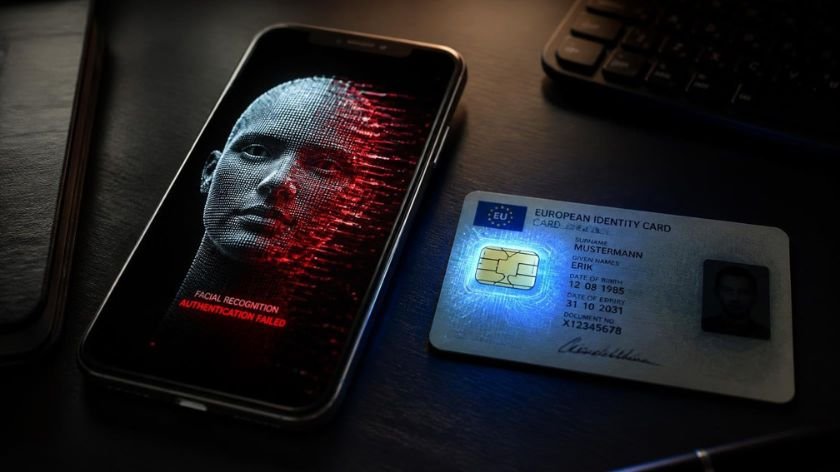
The next generation of digital identity is therefore no longer solely about facial recognition, but about cryptographically provable trust. A simple selfie is no longer proof; the focus is shifting to the question of whether it is the right person, with the right device, in the right place, and at the right time.
To combat identity fraud, a structure consisting of multiple layers of trust is essential. This includes liveness detection to establish vitality, cryptographic attestations for reliability, contextual checks (such as location and behaviour), and continuous validation instead of just a one-time check during onboarding. While cybercriminals are investing heavily in better AI, organisations must invest in establishing this trust.
Digital identity must be part of a broader trust infrastructure. By combining identity verification with cryptographic trust, privacy by design, and risk-based authentication, a future-proof solution against AI-driven identity fraud is created.