







The Public Prosecution Service (OM), the Netherlands Forensic Institute (NFI), and the police have completed their pilot with genealogical DNA databases. The result is a completely new investigative tool for the Netherlands for serious criminal cases. In two of the six selected cold cases, the pilot yielded useful leads. The method compares DNA profiles from […]
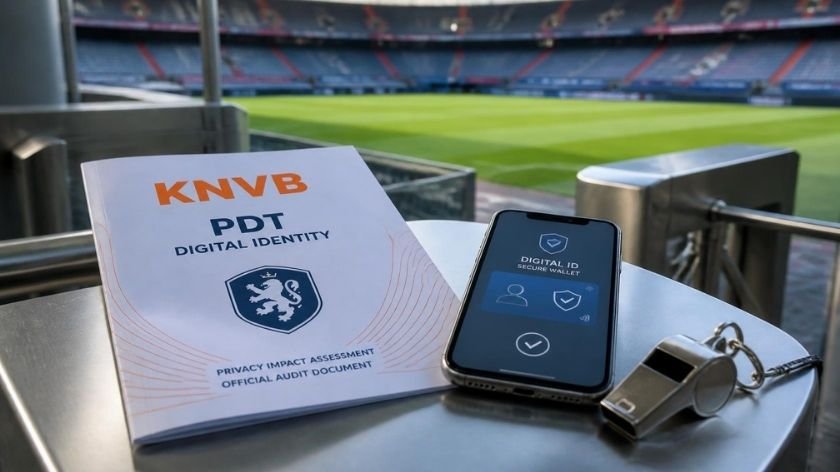
From the 2028/2029 season, the KNVB intends to make ‘Personal Digital Access’ (PDT) mandatory to more effectively combat ticket abuse in football stadiums. To achieve this, supporters must complete a mandatory one-time digital identification by scanning their identity document via an app. However, recent research raises significant privacy concerns, as an excessive amount of sensitive […]

The national police are increasingly using drones to monitor the traffic behavior of motorists and to enable more targeted enforcement. With these flying cameras, officers can more efficiently supervise dangerous road situations, such as tailgating or smartphone use behind the wheel. While this is intended to benefit overall road safety, the deployment of this aerial […]

The municipality of Enschede has published an explanation regarding the policy on the deployment of cameras with facial recognition technology in public spaces. The use of this type of advanced biometric technology inevitably raises critical questions about the protection of citizens’ privacy. Under the strict rules of the General Data Protection Regulation (GDPR), the processing […]

Privacy First warns that new AMLA guidelines could lead to continuous monitoring of bank customers, with every citizen being tracked preventively. The foundation fears a financial surveillance state that conflicts with fundamental rights under the GDPR and the European Charter, among others. According to Privacy First, automated risk profiling with AI is particularly problematic: citizens […]

No fewer than 1,367 employees from leading AI companies have issued an urgent warning: the automation of AI research could suddenly and extremely accelerate development. The risk is growing significantly that artificial intelligence capabilities will develop faster than our human ability to secure, understand, and maintain control over these systems. However, due to immense international […]

A security incident at logistics partner CEVA Logistics may have led to a data breach of customer information from bol and de Bijenkorf. Potentially compromised data includes names, addresses, email addresses, phone numbers, track & trace information, and order details. Bol and de Bijenkorf have informed the Dutch Data Protection Authority and are warning affected […]

OpenAI is currently testing a feature in the US that allows ChatGPT Pro users to link their bank and credit card accounts via Plaid for personal budget insights. Although the AI has read-only access and cannot perform transactions, privacy experts warn of significant risks. Due to the accessible, human-like conversational style of chatbots, users may […]

The Norwegian Data Protection Authority and the Norwegian Directorate of Health present a practical framework for privacy-friendly AI chatbots in the public sector. AI chatbots can provide citizens with faster access to reliable health information, provided that privacy by design is central. The report concludes that user queries generally cannot be considered anonymous, meaning the […]

Research by NOS and Nieuwsuur shows that municipalities are still publishing residents’ personal data in documents made public under the Open Government Act (Woo). This includes email addresses, phone numbers, addresses, citizen service numbers (BSNs), and ID numbers that have been insufficiently anonymized. Several municipalities have since removed the documents and reported a data breach […]
- 1
- 2